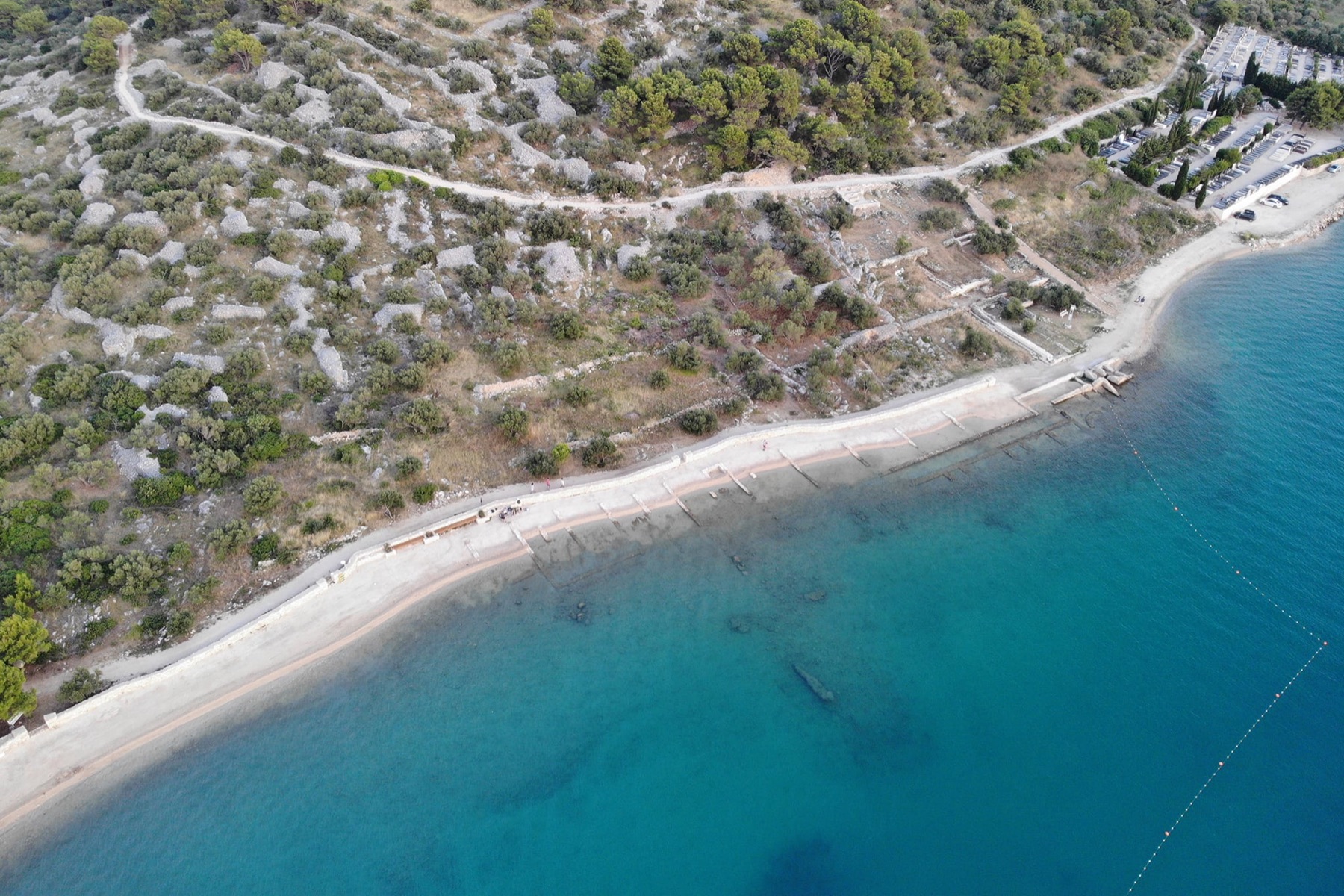
Roman Town
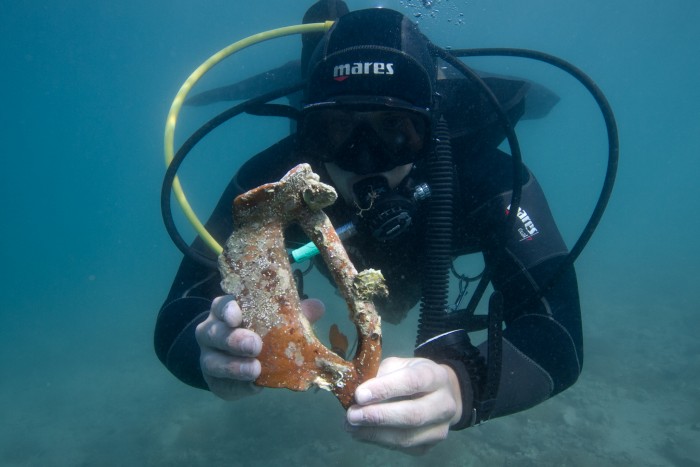
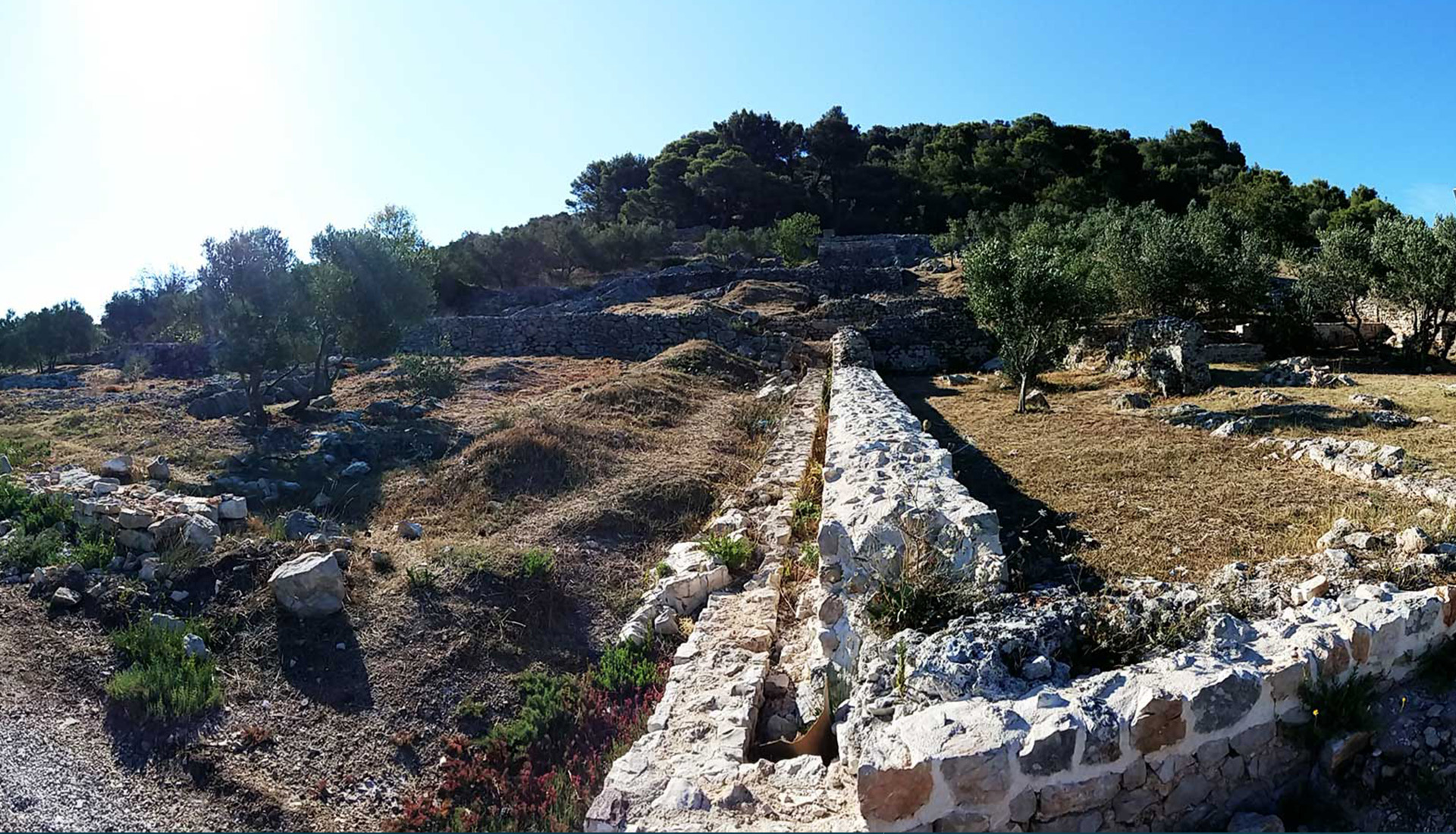
The ancient archaeological remains visible at the foot of Gradina and in the shallow sea nearby attracted the attention of laymen and experts early on, so as early as the 15th century the distinguished Šibenik humanist J. Šižgorić wrote about the existence of an ancient town at this location.
In the following century, Šibenik writers already believed that Colentum was located here, and their opinion was followed by A. Fortis in his travelogue Viaggio in Dalmazia. An analysis of the writings of Roman-era authors has shown that the ancient name of the island and the settlement was Colentum (kóllenton), which is most likely just a Latinised (or Hellenised) form of a Liburnian place name.
Pliny (nat. hist., 3, 140) precisely describes its location in relation to Zadar (from which the island is 30 miles) and to the mouth of the Krka (18 miles), which corresponds exactly to the actual situation on the ground. Pliny speaks only of the island, but a somewhat later author, Claudius Ptolemy (geogr., 2, 16, 6), mentions a town (pólis) kóllenton.
In Roman times, at the latest in the 1st century AD, the settlement also spread down to the foot of Gradina, along the western coast and towards Hramina Bay. Ptolemy's expression “pólis kóllenton” mentioned earlier is a clear indication that the remains of ancient architecture on the Gradina peninsula belong to an urban-type Roman settlement which, judging by the results of archaeological research, prospered in the early Empire.