
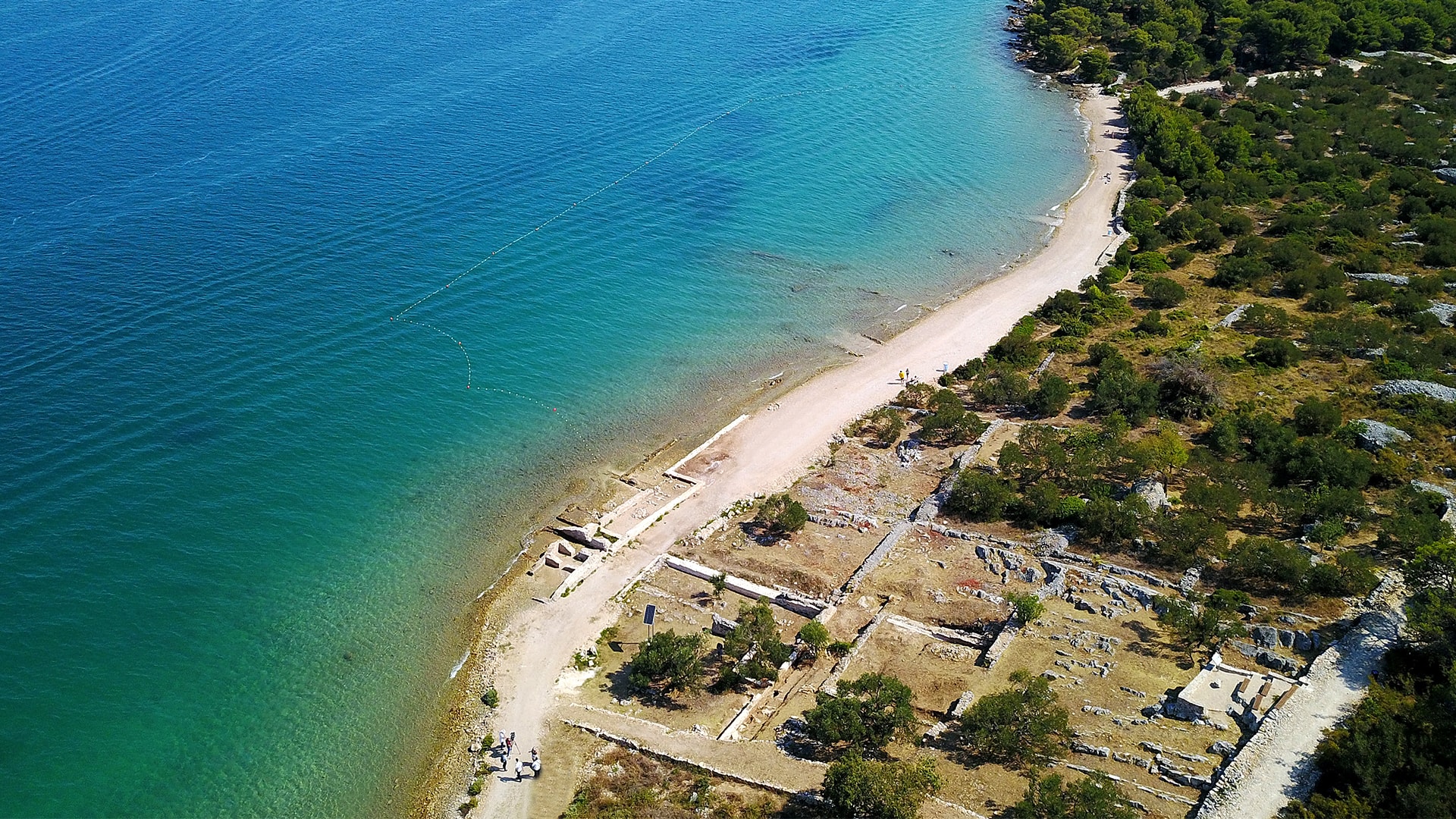
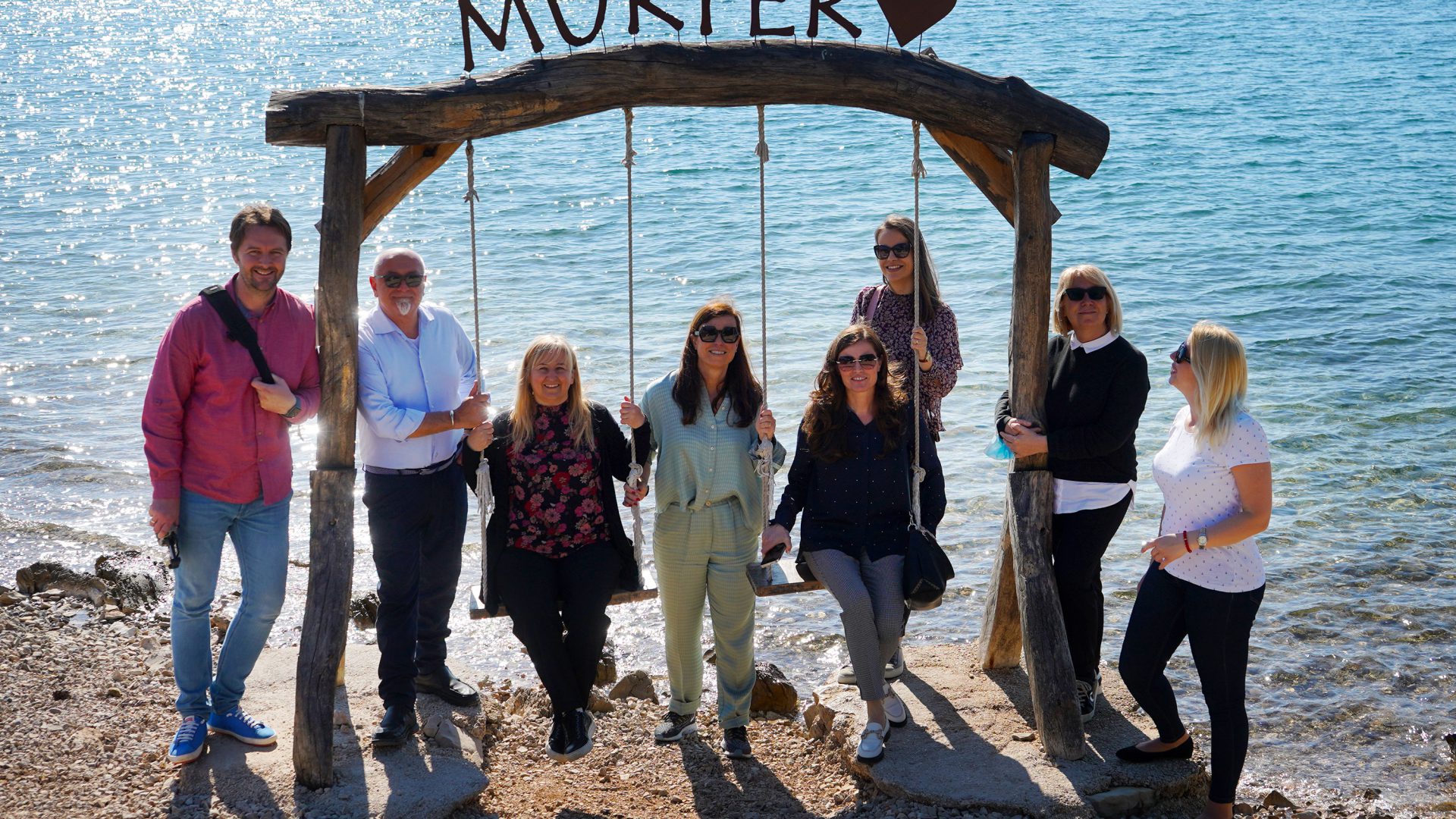
An underwater sculpture park, educational trails on cultural and historical heritage, and a tourist website with a related app on the connection between tradition and nature on the island of Murter. All of this will be the result of the cross-border Tangram project, through which Argonauta, the association for the protection of nature and the environment and the promotion of sustainable development, hosted partner organisations from Italy, Slovenia, Bosnia and Herzegovina, Serbia and Albania last week. The two-day meeting was the perfect opportunity to discover the Colentum archaeological site and everything Murter can offer tourists through its combination of rich heritage and unspoilt nature.
Plans for the development of a sustainable Murter
– After summarising all the project activities, we presented the plan for our further activities, based on the vision of a sustainable Murter by 2030, through which we want to encourage the further development of a green, plastic-free community, with a focus on preserving the biodiversity of the sea and nature. An attractive underwater sculpture park will contribute greatly to this, while educational trails with illustrations and detailed descriptions will present a side of our island's history unknown to many. Finally, it is all rounded off by a tourist website with a linked mobile app, again with an emphasis on protecting nature at the Natura 2000 sites in this area, through which we want to bring our vision of a sustainable Murter closer to tourists and local people alike – says Sanja Kovačev, executive director of the Argonauta association and head of the Heritage Valorisation in Tourism programme, stressing that all of this will be carried out by the end of January 2023, when the project
Tangram also ends.
Developing a network of parks in this part of Europe
Through this project, Argonauta also held meetings with tourism stakeholders, taking into account all the ideas, suggestions and criticisms of local people, and with the help of their feedback developed a local action plan. This very strategy, combined with the action plans of organisations from Monza and Ostellato in Italy, Banja Luka in Bosnia and Herzegovina, Niš and Banat in Serbia, Evia in Greece, Vlora in Albania and Kranj and Bohinj in Slovenia, has contributed to the development of a transnational plan for a network of parks and gardens in this part of Europe. Although this far-reaching plan is still being drawn up, it is known that it will focus on 6 main directions – protecting and preserving nature, educating local people and young people, developing infrastructure, promotion and marketing, sustainability, and clearer territorial management through which the economy and tourism can progress at the same time. These were the conclusions of the Tangram project meeting on Murter, which, in the opinion of all partners, lays an excellent foundation for developing a network through which knowledge, skills and examples of good practice are already being exchanged, with the end result benefiting local people and potential tourists most of all.
The project “TANGRAM – Transnational parks and Gardens Resources in Adriatic and Ionian tourist marketplace” is implemented by Argonauta, the association for the protection of nature and the environment and the promotion of sustainable development. The project is co-financed by the European Union under the INTERREG ADRION Adriatic-Ionian cross-border cooperation programme, from the European Regional Development Fund (ERDF). The total value of the project is EUR 1,645,945.00, and it runs from 2 January 2020 to 31 January 2023. The content of this post is the sole responsibility of Argonauta, the association for the protection of nature and the environment and the promotion of sustainable development.