Roman Town

A rich port town that archaeologists call the town of mosaics

In the 1st century AD the settlement spread from the top of Gradina down to the sea and grew into a Roman town with a harbour, streets and luxurious houses decorated with mosaics. Its location was precisely recorded by Pliny the Elder and Claudius Ptolemy.

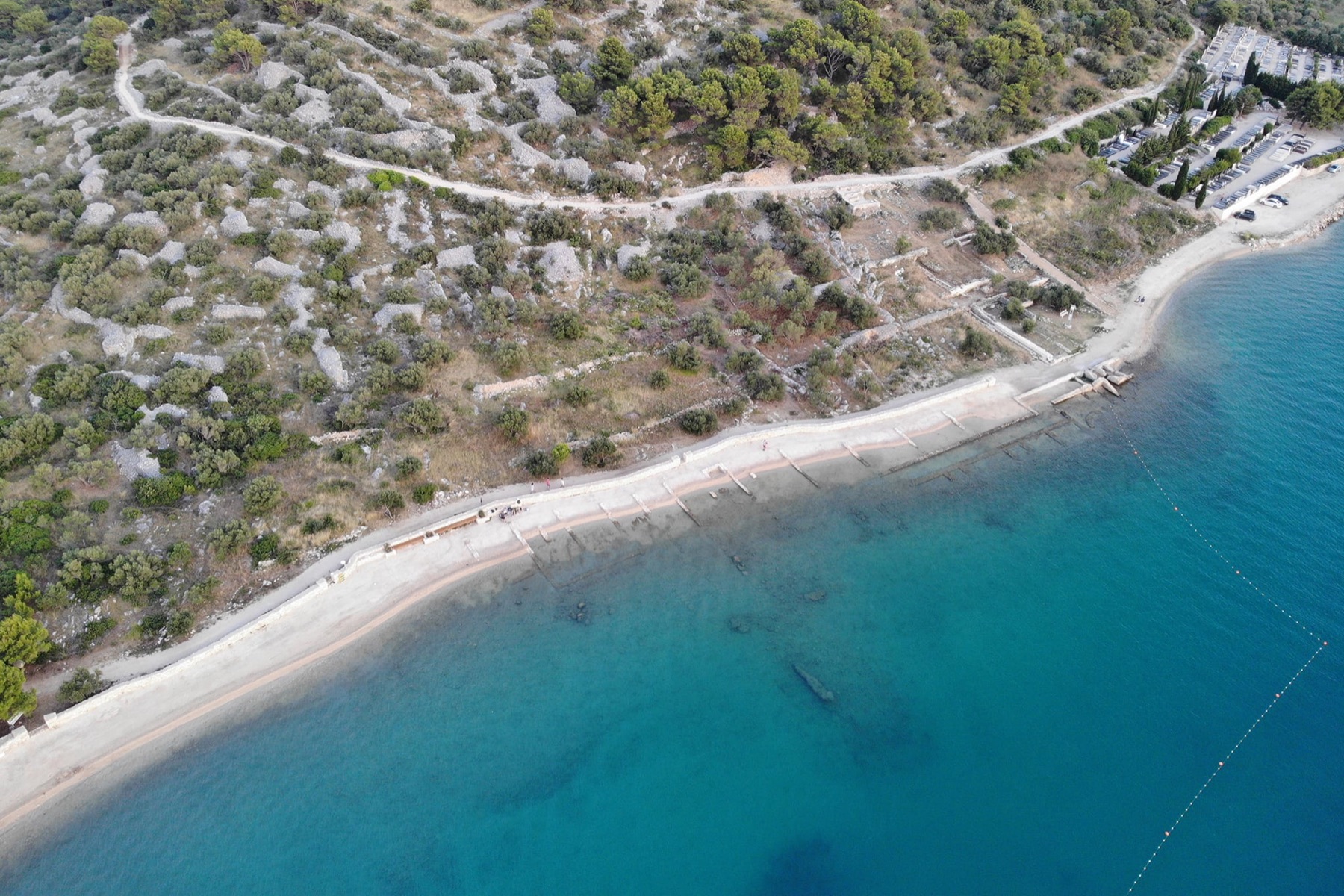
Obala poluotoka Gradina i uvala Hramina iz zraka
1st century BC – 4th century AD

Roman Town

The ancient archaeological remains visible at the foot of Gradina and in the shallow sea nearby attracted the attention of laymen and experts early on, so as early as the 15th century the distinguished Šibenik humanist J. Šižgorić wrote about the existence of an ancient town at this location.

In the following century, Šibenik writers already believed that Colentum was located here, and their opinion was followed by A. Fortis in his travelogue Viaggio in Dalmazia. An analysis of the writings of Roman-era authors has shown that the ancient name of the island and the settlement was Colentum (kóllenton), which is most likely just a Latinised (or Hellenised) form of a Liburnian place name.

Pliny (nat. hist., 3, 140) precisely describes its location in relation to Zadar (from which the island is 30 miles) and to the mouth of the Krka (18 miles), which corresponds exactly to the actual situation on the ground. Pliny speaks only of the island, but a somewhat later author, Claudius Ptolemy (geogr., 2, 16, 6), mentions a town (pólis) kóllenton.

In Roman times, at the latest in the 1st century AD, the settlement also spread down to the foot of Gradina, along the western coast and towards Hramina Bay. Ptolemy's expression “pólis kóllenton” mentioned earlier is a clear indication that the remains of ancient architecture on the Gradina peninsula belong to an urban-type Roman settlement which, judging by the results of archaeological research, prospered in the early Empire.
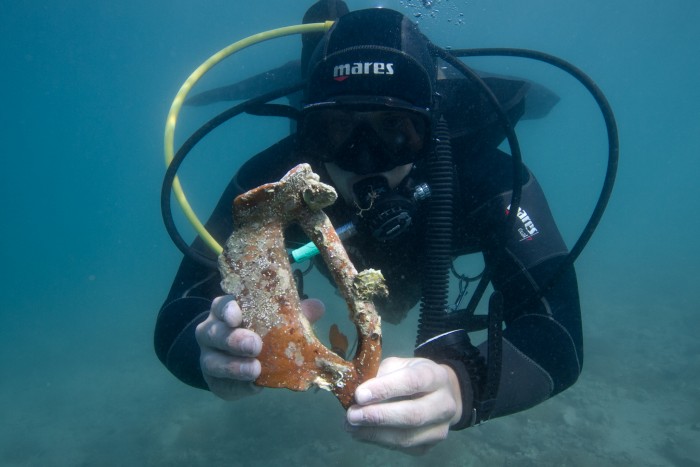
Ronilac s ulomkom amfore u podmorju Colentuma
The port of Colentum

A port town

The Roman settlement of Colentum was also a port town, given the remains of harbour facilities and, as already mentioned, the fact that the waters around Murter were of great importance for maritime traffic.

The port of ancient Colentum stretched along the north-western side of the Gradina peninsula, just past today's church. It lay in a very sheltered bay, closed off on one side by the Gradina peninsula and on the other by the islets of Mali and Veli Vinik and Tegina.

The period from the 1st century BC is considered the time of its busiest traffic.

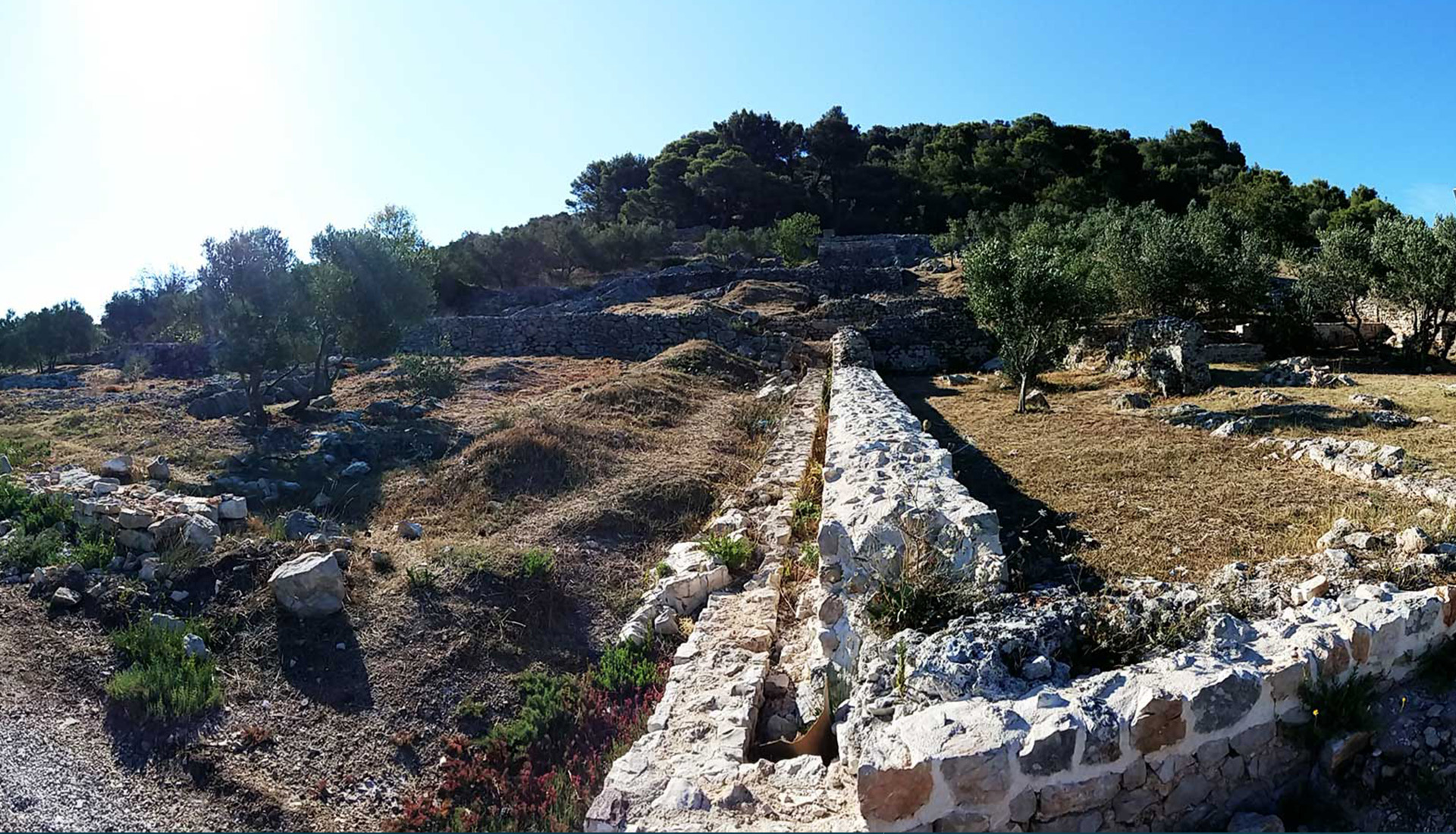
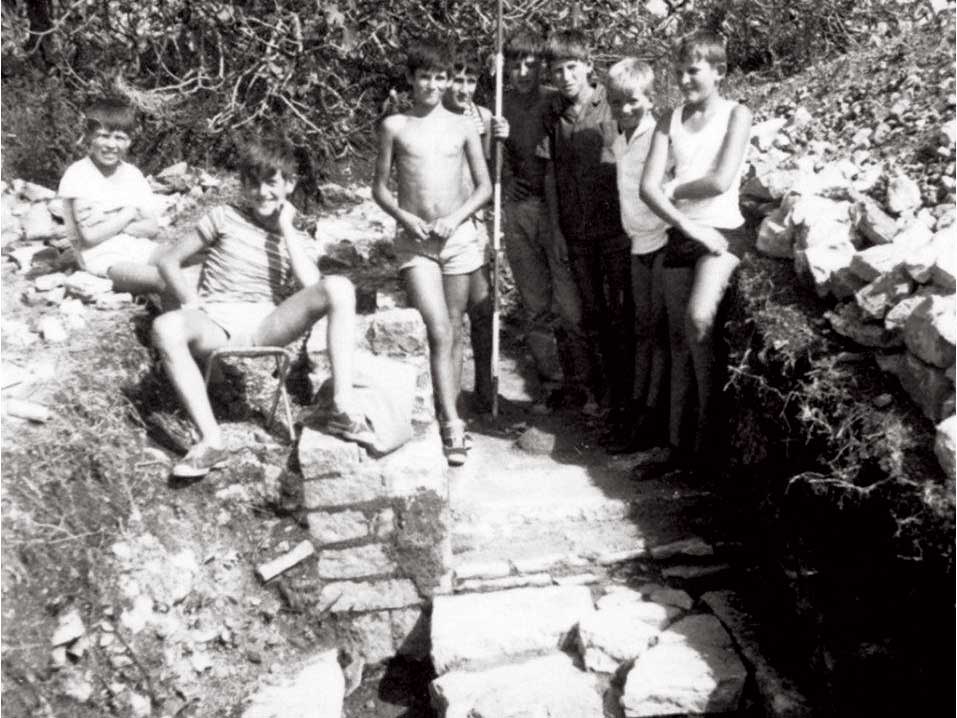
Arhivska fotografija iskopavanja rimske ulice na Gradini
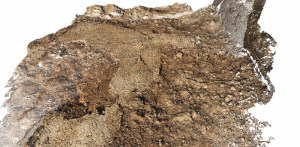
3D snimka iskopanog sloja tla s ostacima
A rich trading town

Town of Mosaics

Some modern archaeologists call Colentum the town of mosaics because wherever they start digging they find remains of mosaics, which also shows that Colentum was a rich trading town.

Today the best-preserved micro-sites are:

  • the Roman maritime villa,
  • the Roman road,
  • the Roman cistern.

The site where an ancient necropolis, i.e. cemetery, is believed to have been is still unexplored.

Colentum is also thought to have had an acropolis at the top of Gradina hill; however, almost all of its material was removed by the people of Murter, who used the ancient stone to build their houses, churches and other buildings.