
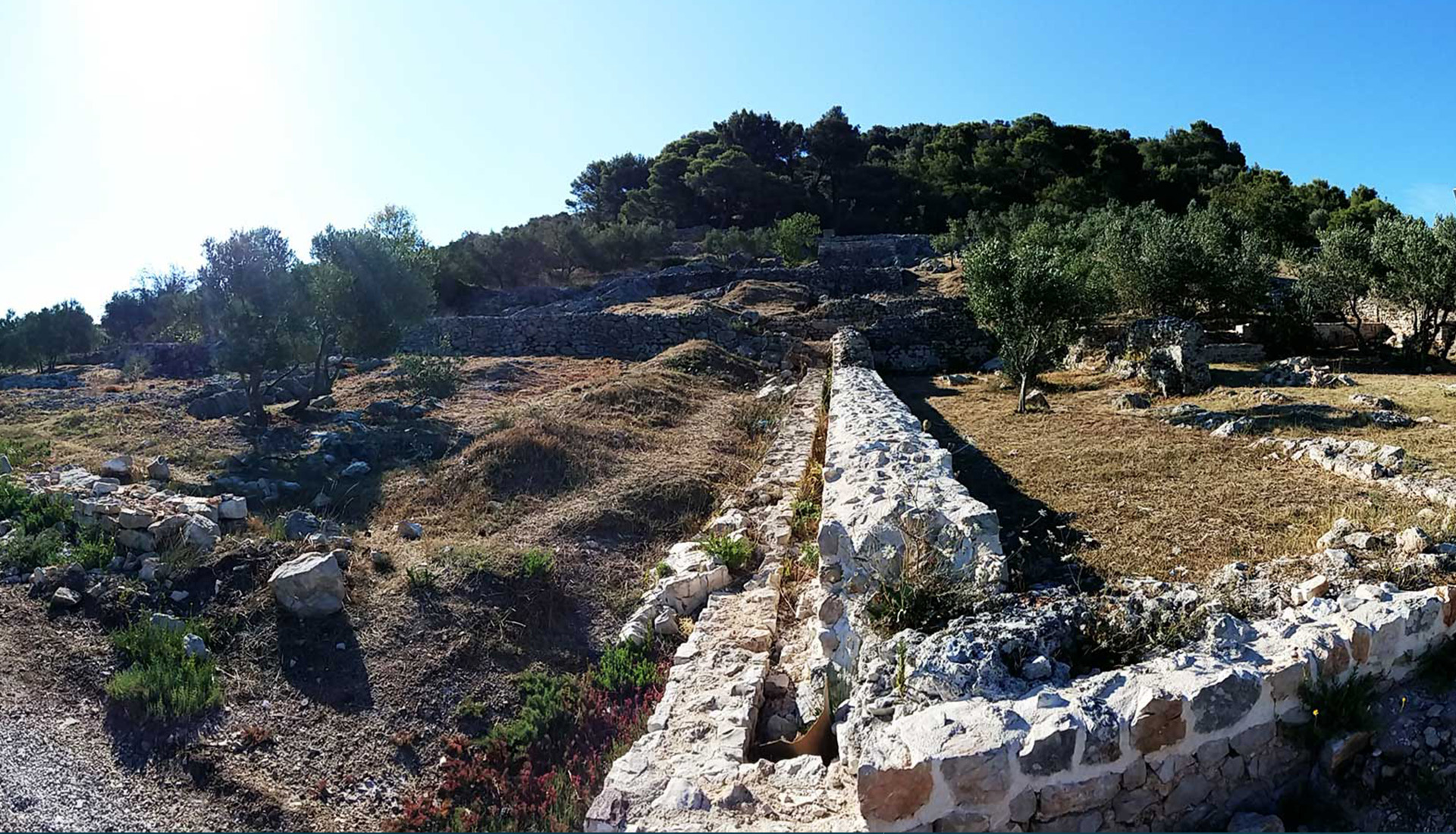
 Archaeology
A Roman town by the sea
Walk among the remains of the Liburnian and Roman settlement on Gradina hill, more than 2000 years old.
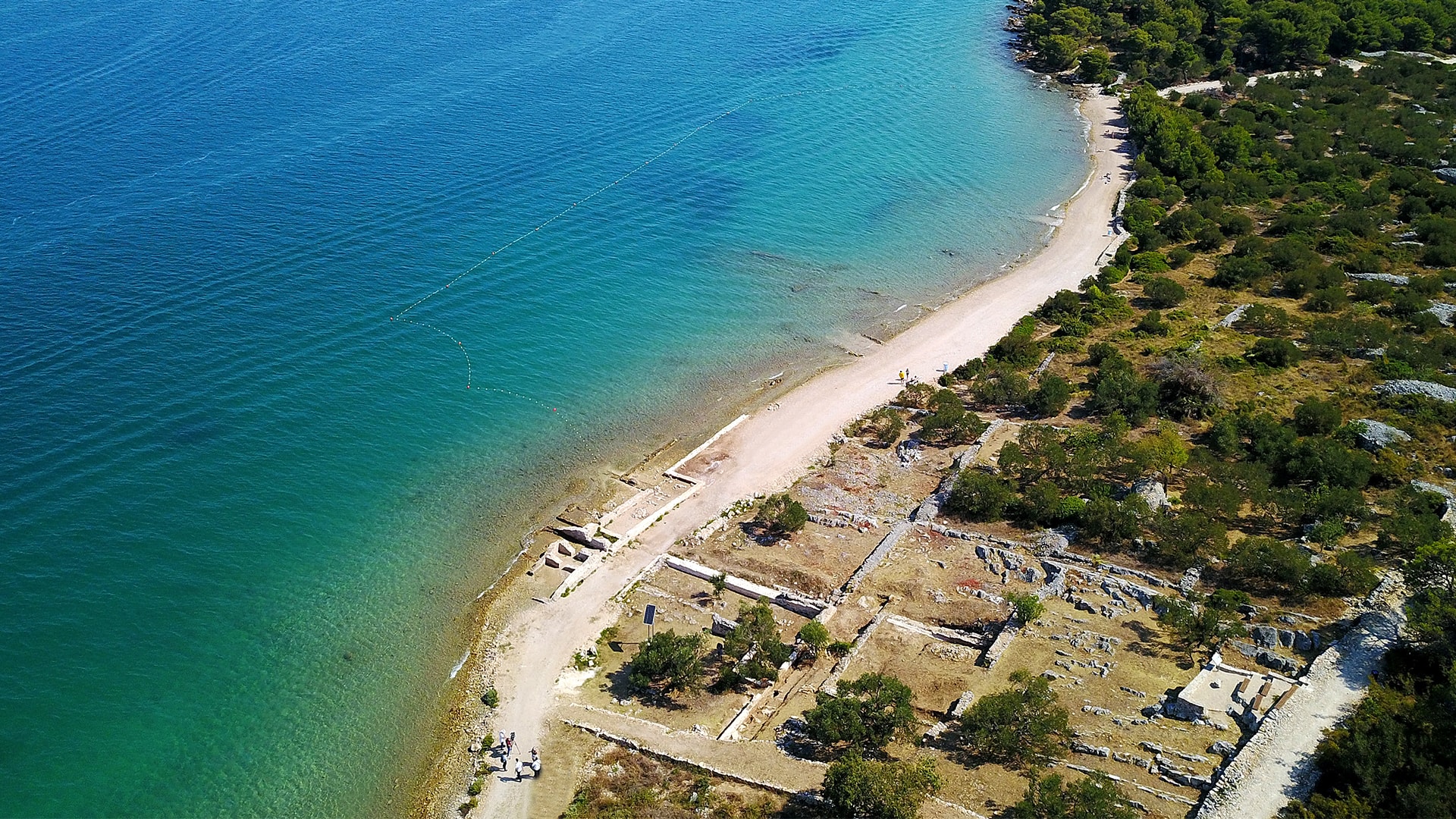
Stroll among the remains of an ancient town, explore the first archaeological beach in Croatia and experience two thousand years of history to the sound of the sea.
Free parking is available at the entrance to the site.
A visit takes 2 to 3 hours, depending on your pace.
The paths are accessible and safe for families with children.
Entry is free all year round, with no charge.
The best time of day to come is in the morning or early evening.
Two thousand years ago Roman ships moored here. Today you can walk, dive and swim among the walls of the town of mosaics, on the only archaeological beach in Croatia.
Archaeology
Walk among the remains of the Liburnian and Roman settlement on Gradina hill, more than 2000 years old.
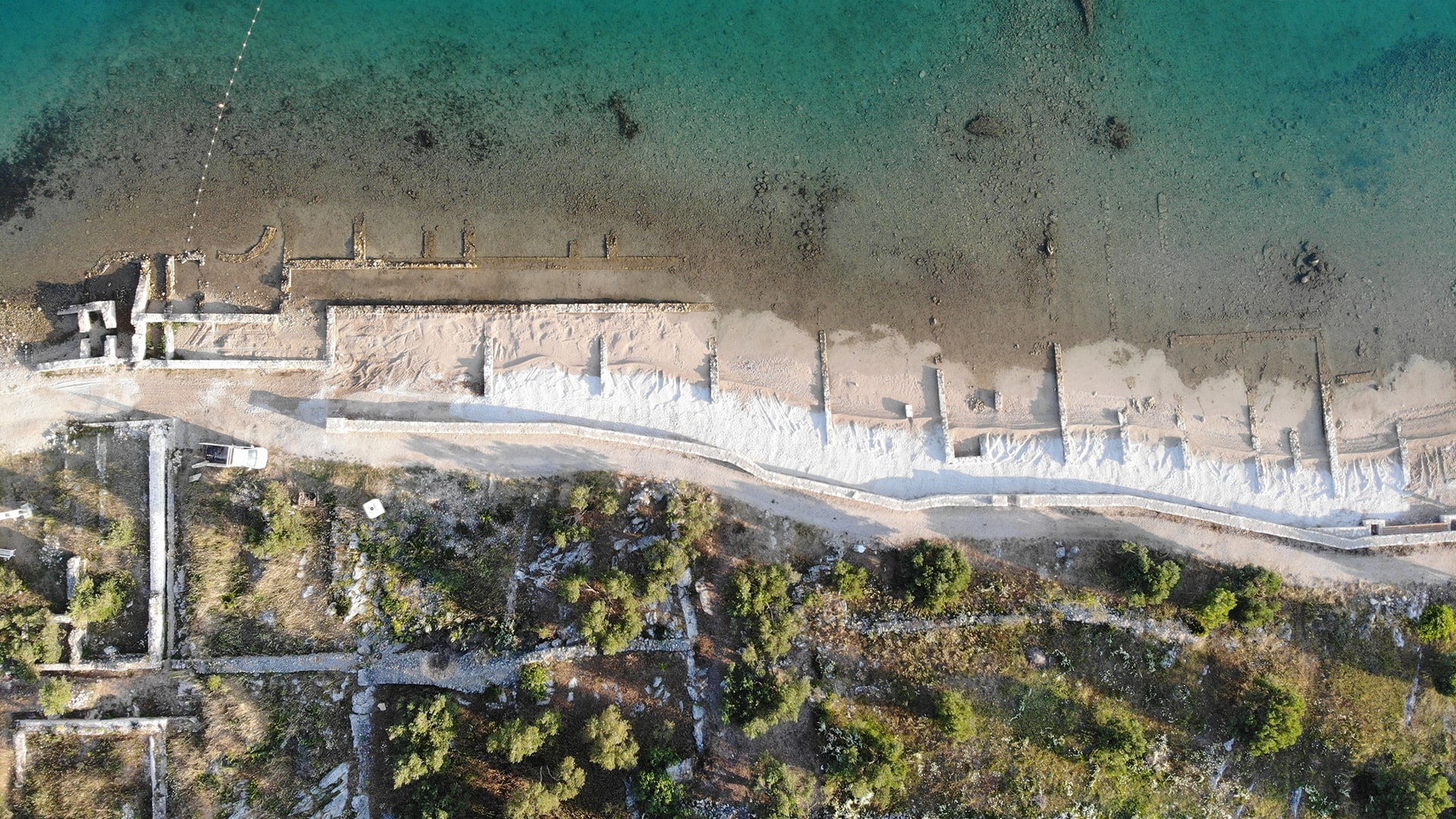 Swimming & Education
The only archaeological beach in Croatia — swim where Roman ships once moored.
 Snorkelling
With a mask and snorkel, dive among the sunken remains of the quays that bear witness to the splendour of the imperial era.

An easy footpath leads from the centre of Murter (about a 15-minute walk). By car, follow the signs to Hramina Bay and Gradina cemetery.
15 minutes from the centre of MurterParking spaces are available at the foot of Gradina hill and close to the archaeological beach and the info point. In the summer months we recommend coming on foot.
Free parking at the foot of the hillColentum is an open-air museum, open 365 days a year with no admission charge. The most beautiful light for photography and a pleasant walk is early in the morning or at sunset.
Free entry 0–24hThe main path along the sea is easy to walk and suitable for pushchairs. To explore the stone walls at the top of Gradina, bring comfortable shoes and sun protection, and a mask and fins for the beach.
Comfortable shoes and swimwearThe island of Murter was inhabited as early as prehistory and the Illyrian period. The Liburnians and Romans who lived on the island left clear traces of their presence. The architectural remains of Roman buildings, harbour structures and mosaics testify to the importance of the island in antiquity.
The Liburnian and Roman town of Colentum is one of the most important archaeological sites in the region. The remains of walls on Gradina hill, along with numerous mosaics, everyday objects, amphorae and the like, bear witness to the past of this Liburnian and Roman town.
Colentum is mentioned in the writings of the Roman encyclopaedist Pliny the Elder and the geographer Ptolemy as a proud maritime centre of the Liburnian coast.
“The Night of Roman Colentum” was created to popularise the archaeological site of Colentum and bring its historical significance closer to tourists and local residents alike.
Learn moreTake part in workshops that raise awareness of the importance of fishing and maritime heritage for restaurateurs, fishermen and fish processors.
Learn moreAn underwater archaeological trail with information panels reveals how the sunken Roman piers were built.
Learn moreWalk among the remains of the Liburnian and Roman settlement on Gradina hill, more than 2000 years old.
Learn moreA tree house on a pine, a monument to volunteering, letters that form words and a bench on a tree trunk — four places you will want to capture.

At Colentum, on the path above the Roman villa.

Along the path towards Cape Gradina, behind the wooden swing on the archaeological beach.

Raduč hill – through the tunnels to the second artillery battery.

East side of Raduč hill, in front of the ruined barracks.
Download the Colentum tourist map, plan your trip, pack a towel and set off on an adventure to discover the first archaeological beach in Croatia.
We present the new attractions on the island of Murter and how to reach them. Enjoy!
The Amphorarium project, the Centre for Culture and Heritage Interpretation of the island of Murter, was presented in Murter, and with the signing of the works contract the project has entered its key phase of implementation.
After a year of implementation, the Tastes from the Amphora project has come to an end. Its main goal was to contribute to the valorisation of maritime heritage in the area of FLAG Galeb through an innovative approach to popularising and…


